
Decision Fatigue During Extended Trucking Shifts
Extended trucking shifts demand intense focus and constant decision-making from drivers, who must navigate complex routes, changing road conditions, and strict delivery schedules. Amid these challenges, decision fatigue emerges as a critical yet often overlooked factor affecting driver performance and overall road safety. This article explores the phenomenon of decision fatigue in the context of trucking, explaining its underlying mechanisms, how it manifests during prolonged shifts, and its implications for crash risks on highways.
Understanding Decision Fatigue in Trucking
Decision fatigue refers to the deteriorating quality of decisions made by an individual after a long session of decision-making. Every choice requires mental energy, and as this resource depletes, cognitive function diminishes. For truck drivers, decision fatigue can gradually impair their ability to process information and make timely judgments throughout extended work hours.
Cognitive Depletion and Mental Energy
The human brain relies on limited cognitive resources to evaluate options and select appropriate actions. This cognitive energy is finite and susceptible to exhaustion. Unlike physical fatigue, which stems from muscle weariness, decision fatigue specifically relates to the brain’s diminishing capacity to engage in complex thinking and self-control after repetitive or prolonged decision-making tasks.
Extended trucking shifts present a unique environment where drivers continuously face numerous decisions—ranging from route adjustments due to traffic, responding to weather changes, managing speed, to monitoring vehicle systems. Each of these decisions incrementally drains mental energy, contributing to a cumulative effect that can reduce alertness and decision-making sharpness.
Decision Fatigue and Trucking Schedules
Long-haul drivers often operate under demanding schedules, sometimes pushing beyond conventional work-hour limits due to delivery pressures or unforeseen delays. The repetitiveness and monotony of long-distance driving can compound the effects of decision fatigue. While the task may appear straightforward, the necessity to remain vigilant for sudden changes—such as unexpected obstacles or road hazards—requires constant, focused decision-making that taxes cognitive reserves.
The complexity of navigating through different jurisdictions with varying traffic laws and rest stop availabilities adds layers to the decision-making process. This complexity can exacerbate mental exhaustion as drivers weigh options about when to rest, where to refuel, and how best to maintain compliance with regulations while meeting deadlines.
The Mechanics of Decision Fatigue in Extended Shifts
Decision fatigue generally involves a progressive decline in executive functions, which include self-regulation, impulse control, and problem-solving. As drivers gather more hours behind the wheel, the ability to maintain these executive functions wanes.
Impact on Attention and Reaction Times
One key manifestation of decision fatigue is a reduction in sustained attention. Over time, drivers may experience micro-lapses in concentration or slower responses to stimuli. Road environments demand rapid processing of unexpected events such as sudden braking by vehicles ahead or animals crossing the highway. As decision fatigue sets in, the capacity to make split-second decisions deteriorates, potentially leading to delayed reactions and compromised safety margins.
Influence on Risk Assessment and Judgment
Decision fatigue also influences drivers’ risk evaluation. When cognitive resources are depleted, individuals are more prone to mental shortcuts or heuristics, which can distort judgment. A fatigued driver might underestimate the danger of certain maneuvers or overestimate their ability to respond to emergencies. Moreover, decision fatigue can weaken impulse control, increasing the likelihood of risk-taking behaviors such as speeding or unsafe lane changes.
Relevance to Real-World Trucking Crashes
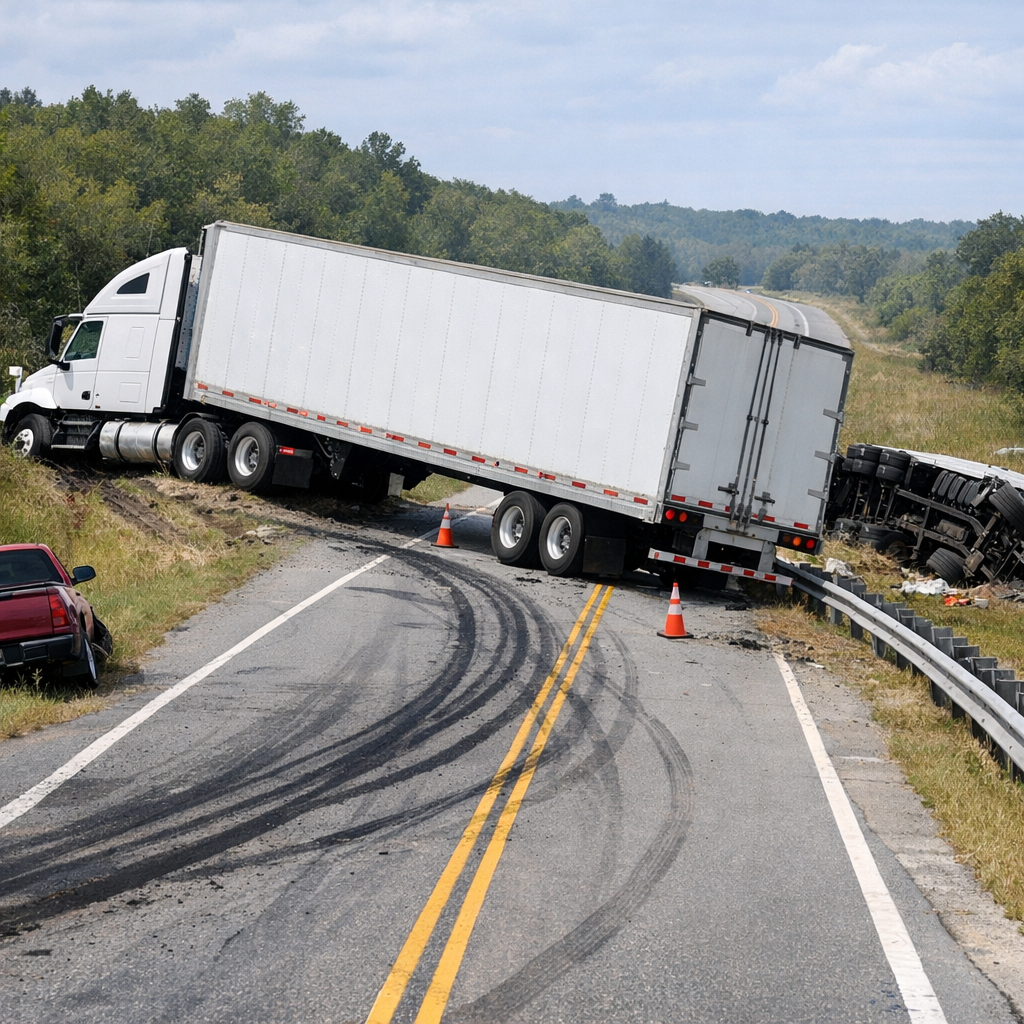
The interplay between decision fatigue and crash occurrences reveals crucial insights into trucking incident causation. Extended shifts that lead to decision fatigue coincide with heightened crash risks, highlighting a significant human factor in transportation safety.
Correlation Between Extended Driving and Crash Risk
Statistical analyses often show that truck crashes are more common during the latter parts of shifts or after long continuous driving periods. Decision fatigue contributes to this pattern by impairing cognitive functioning precisely when high alertness is essential. Fatigued drivers may fail to anticipate hazards, misjudge distances, or react inadequately to changing traffic dynamics, all of which increase collision likelihood.
Compounding Effects with Physical Fatigue
Decision fatigue does not operate in isolation but frequently accompanies physical tiredness. Both forms of fatigue can synergistically diminish overall performance. While physical fatigue can slow reaction times and induce microsleeps, decision fatigue undermines judgment and decision-making clarity. The combined effect can substantially raise the odds of errors that lead to crashes, particularly in complex traffic situations requiring rapid, decisive action.
A Neutral Perspective on Decision Fatigue’s Role in Trucking
Recognizing decision fatigue as an influential factor in the trucking industry expands the understanding of operational challenges faced by drivers. It highlights the nuanced ways cognitive limitations interplay with the demands of the job. However, decision fatigue is one of multiple elements that affect driver performance, alongside physical health, environmental conditions, vehicle factors, and organizational pressures.
Exploring decision fatigue trucking opens avenues for further study into how cognitive demands fluctuate throughout shifts and how they impact safety outcomes. It provides a lens through which to view the human experience behind the wheel, emphasizing that mental energy and decision-making capacity are vital components in the complex system of commercial trucking operations.